What to remember
- The course is built in the valley between Whistler and Blackcomb, in the Fitzsimmons drainage, with check-in at the Ziptrek base by the Excalibur Gondola in Whistler village.
- Old-growth means the forest has never been cleared, so it holds trees of very different ages and sizes rather than one even, planted crop.
- Suspension bridges and treetop platforms link the ziplines, so the three hours mix walking across a swaying span with clipping into a line.
- Two guides run the tour rather than one, which changes the pace of the three hours and how much of it is spent waiting at a platform.
Where the Course Begins
Check-in for the Whistler zipline eco tour is at the Ziptrek Outfitting Base, at the base of the Excalibur Gondola in Whistler village. That gondola runs up Blackcomb, but the course itself does not follow it. The ziplines are built lower down, in the valley floor between the two mountains.
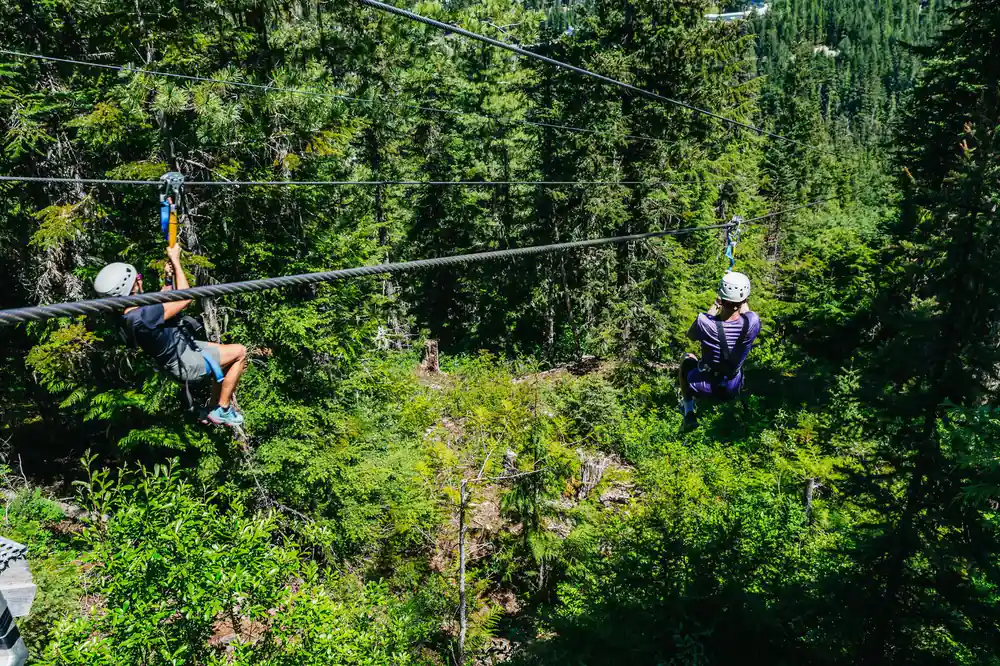
On a Whistler zipline map, that valley sits as a narrow strip running between Whistler and Blackcomb rather than up either slope. It carries a creek and a stand of old-growth forest, and the course is threaded through that forest rather than cleared beside it.
The transfer between the base and the course itself is short. There is no long drive or a second gondola ride before the ziplines start: check-in, gear, and then the walk into the valley where the lines are strung.
The Valley Between the Two Mountains
The exact Whistler zipline location is that valley floor, the ground between Whistler and Blackcomb, carrying the creek the forest has grown up around. It is a short transfer from the village rather than a drive out of town.
Whistler and Blackcomb are the two mountains the resort is built between, in the Coast Mountains of British Columbia. The valley that separates them is not empty ground. It carries running water and the strip of forest the course is built in.
That siting matters for what the tour actually is. It is not a course built on a cleared hillside with a view of the resort. It is a course built inside the valley the resort is built around, using the ground between the two mountains rather than the mountains themselves.
A suspension bridge crosses the old-growth canopy between two zipline platforms.
A Forest That Was Never Cleared
Old-growth is not an age you can read off a sign. It means the forest has never been cleared, and that changes what standing inside it feels like more than any single number would. Trees of very different sizes and ages stand together rather than one even crop planted and harvested on a schedule.
That unevenness is the tell. A managed forest tends to read as one texture, trunks close to the same width, canopy close to the same height, planted the same year and due to come down together. This forest does not read that way. Thick trunks stand beside slender ones, and the canopy sits at several different heights rather than one flat ceiling.
None of that unevenness is decoration. It is what old-growth is actually pointing at, not a specific tree and not a measured age, but a forest structure that only happens where nothing has cleared it and started the count over.
Bridges and Platforms Between the Lines
The course is not only ziplines. Suspension bridges span sections between platforms, and the platforms themselves are built into the trees rather than standing apart from them. Moving between one line and the next often means walking across a bridge that shifts a little underfoot before clipping in again.
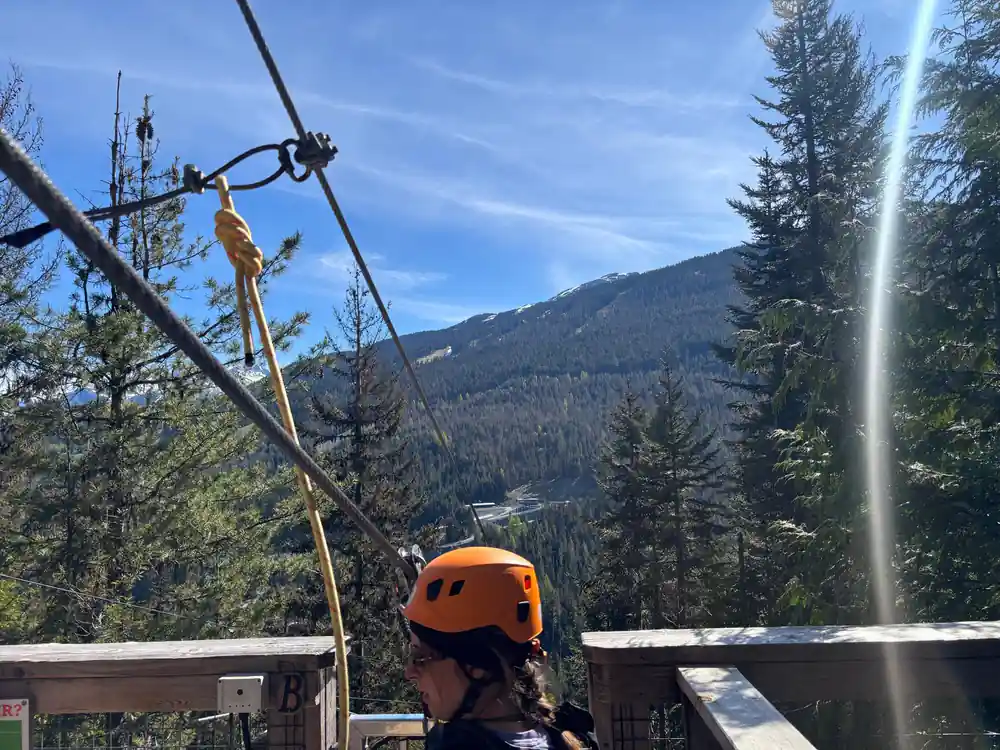
Standing on a platform partway through the course is a different kind of pause from standing on the ground. The forest is level with you rather than overhead, and the creek below is heard more than seen through the canopy in between.
None of the crossings happen at ground level. Every bridge and platform sits above the forest floor, so a pause between two lines still means standing well off the ground rather than on it.
2 guides
Two guides run the course rather than one, which shortens the waits at each platform through the old-growth valley.
Two Guides for Three Hours
Two guides run the tour rather than the one that most zipline courses send out. That is enough to change the shape of three hours: fewer stretches where the group stands at a platform with nobody free to answer a question, and more of the guiding delivered as the group moves rather than only in a briefing at the start.
It also means the course can be worked from both ends of a line at once instead of one guide managing the whole length alone. The practical effect is less standing around and more of the three hours spent actually moving through the forest.
What the Guides Talk About
Ziptrek is an ecotours operator, and the guiding leans toward the forest itself rather than only the mechanics of clipping in and braking. Expect the two guides to talk about the old-growth around the course as much as about the ropework, since that forest is the reason the tour is built here rather than anywhere else in the resort.
The safety talk covers the same ground any zipline briefing does: the helmet and harness, how a line is clipped and unclipped, what a platform is for. What is different is how much of the three hours happens after that, once the group is moving and the guides have room to talk about the valley rather than the equipment.
What You See From the Line
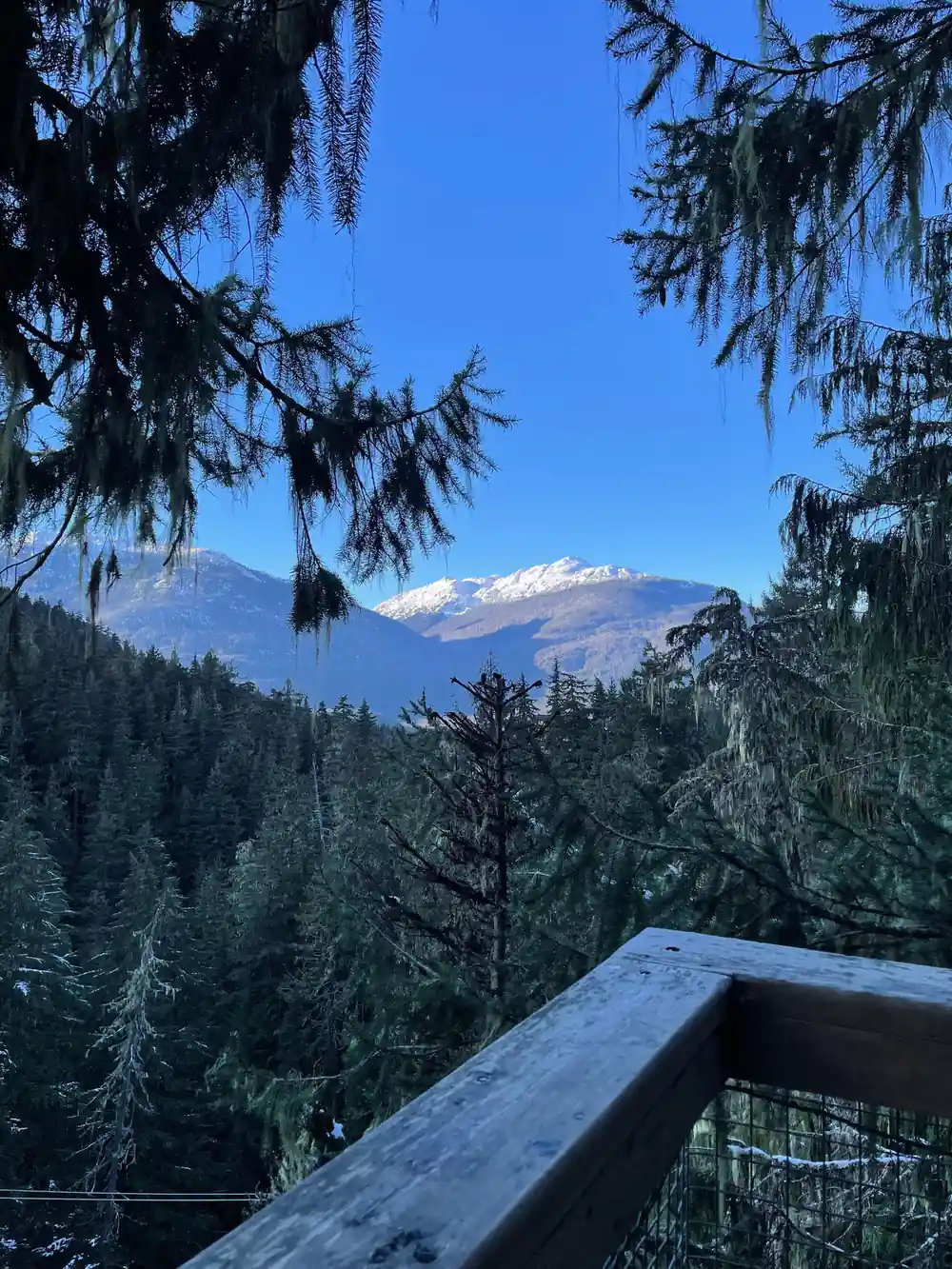
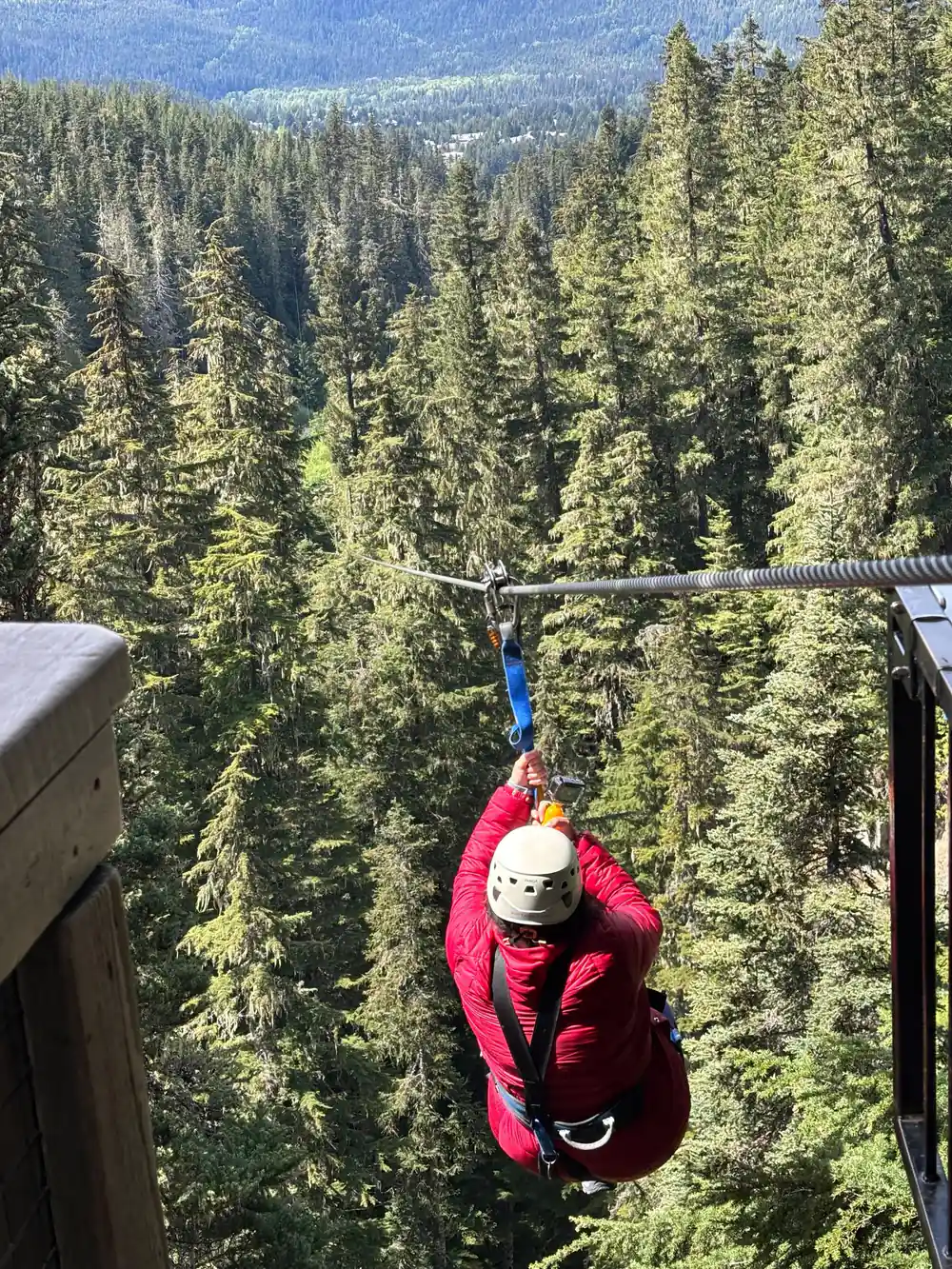
From a line or a platform, the forest is seen from inside rather than from a trail below it: canopy at eye level in places, the ground and the creek further down than they look from a photograph. Whistler and Blackcomb rise on either side of the valley, visible in the gaps where the canopy opens rather than as a constant view.
It is a different way of seeing a forest most visitors only glimpse from a gondola window on the way to one of the peaks. Here the valley floor and the trees in it are the whole point of the three hours, not the view on the way to somewhere else.
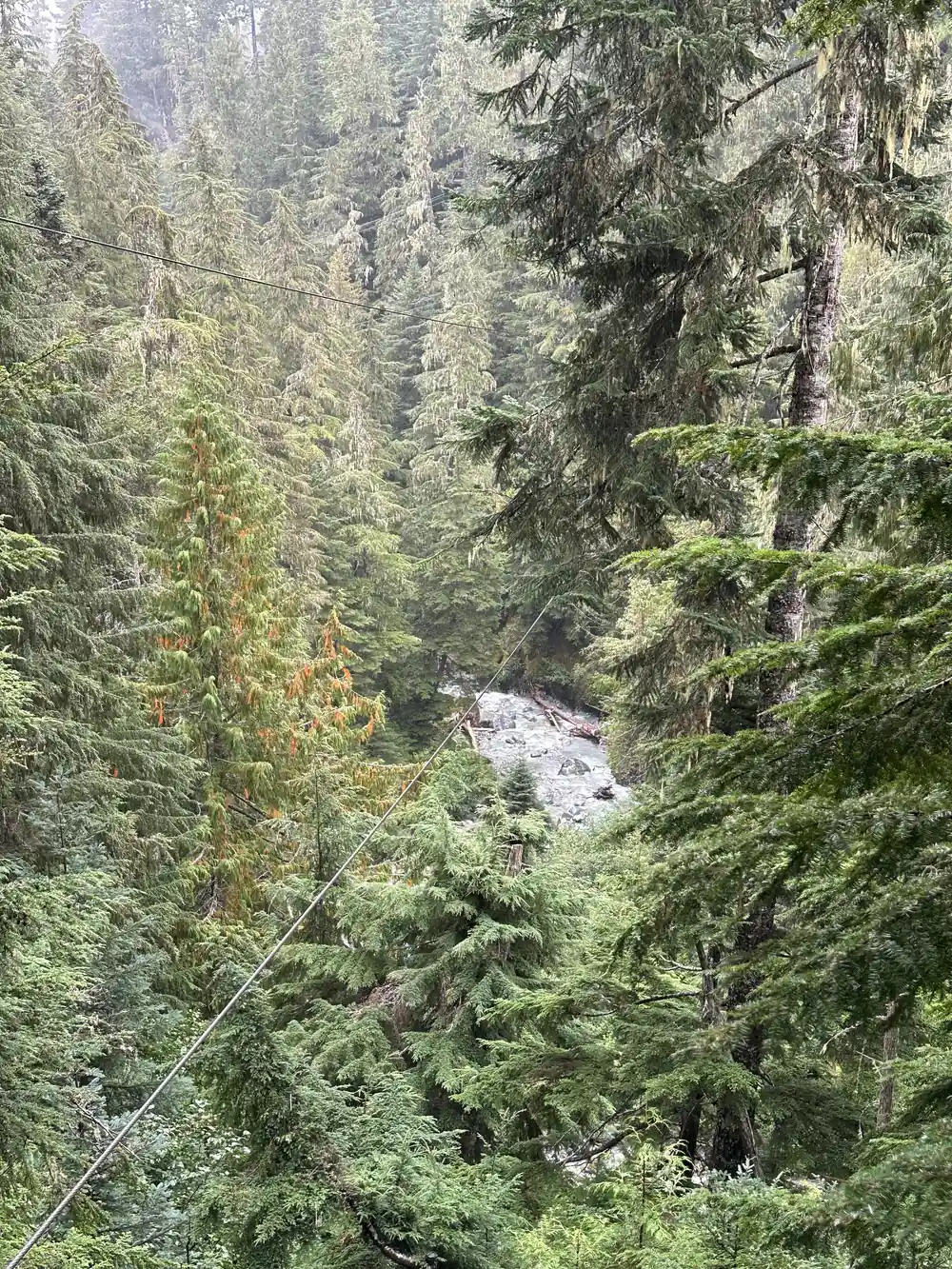
The creek that runs through the valley is easier to hear than to see for most of the course, screened by canopy from above even where it runs close beneath a platform.
Check Dates for the Whistler Zipline Eco Tour
from US$128Reserve now & pay later